Categories: why and how to create them
Categories are the foundation of analysis in Parne. A stable, intention-based structure is what converts raw entries into trend visibility and confident decisions.
Design categories by spending intent
Categories should describe why money was spent, not where it was spent. Merchant names change often and reduce long-term comparability.
- Good: Groceries, Transport, Eating Out, Health.
- Avoid: Supermarket A, Supermarket B, etc.
- Keep names stable so reports stay comparable.
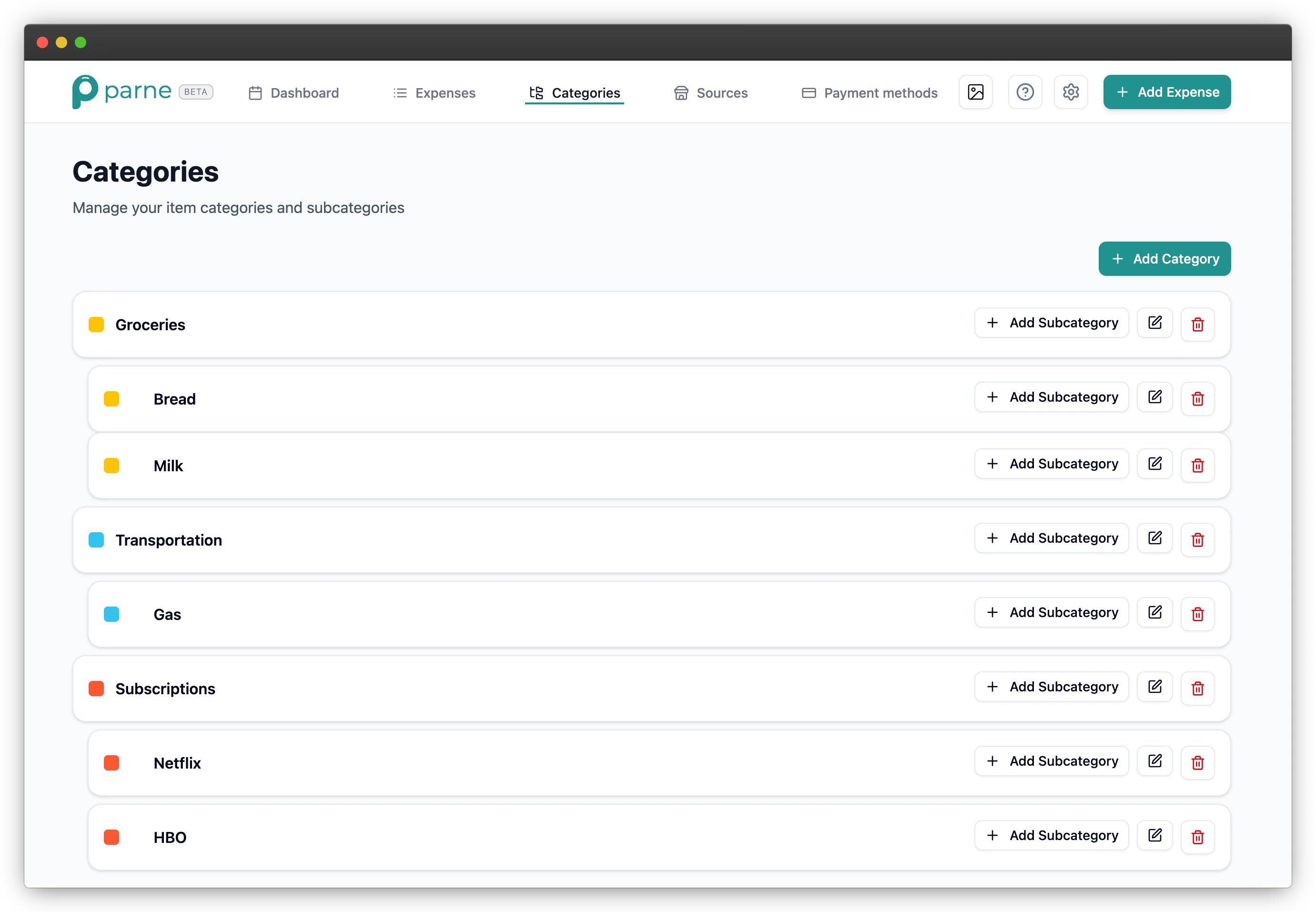
Start compact, then split only when needed
Too many categories adds cognitive load and weakens signal quality. Start compact and split only when a category becomes decision-limiting.
- Start with around 8-12 core categories.
- Create subcategories only when decisions improve.
- Merge low-value categories during monthly cleanup.
When to create a new category
Create a new category only when separation changes decisions, not only because a new merchant appeared.
- You need separate limits (e.g., groceries vs eating out).
- The spending pattern is frequent and meaningful.
- You need to track a specific objective over time.
How to review category quality monthly
A short monthly quality check keeps your category model useful without becoming rigid.
- Find categories with very low transaction counts.
- Merge categories that overlap in purpose.
- Rename ambiguous labels once, then keep stable.
Common mistakes to avoid
Most category problems come from fragmentation and naming inconsistency.
- Too many categories with very few expenses.
- Frequent renaming that breaks trend continuity.
- Mixing category purpose with merchant names.
Practical category examples
A balanced starter set often includes: housing, groceries, eating out, transport, health, subscriptions, education, and leisure.
- Treat it as a starting template, not a strict rule.
- Adapt to your household financial reality.