Expenses: what kind you can create
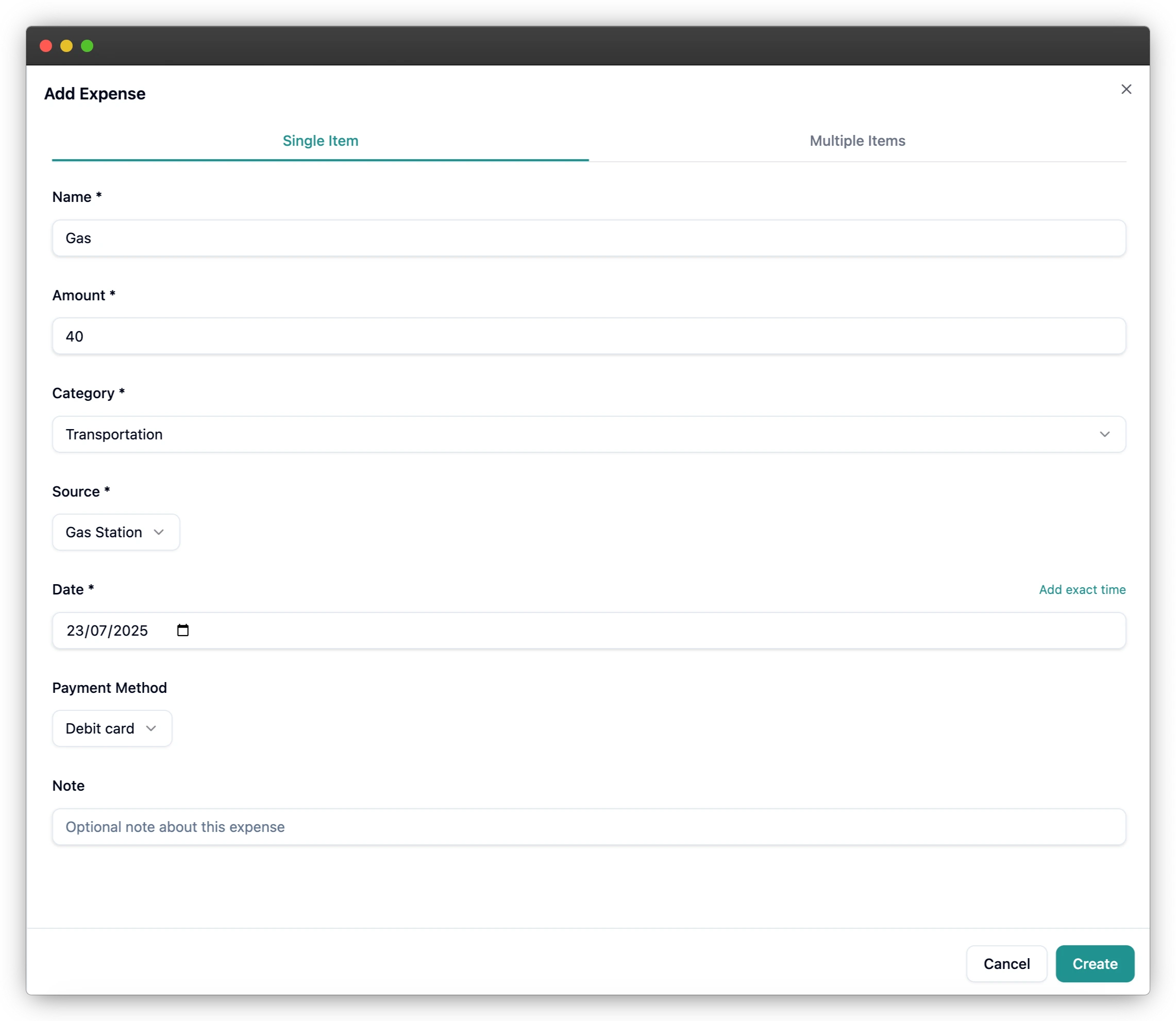
Parne supports one-time, recurring, and future expenses so users can combine operational tracking with planning. The goal is not only to register spending, but to support better decisions week by week.
One-time expenses
Use one-time entries for day-to-day operations and irregular events that do not follow a predictable cycle.
- Daily spending: food, transport, pharmacy, entertainment.
- Unexpected costs: repairs, urgent payments.
- Occasional purchases outside regular cycles.
Recurring expenses
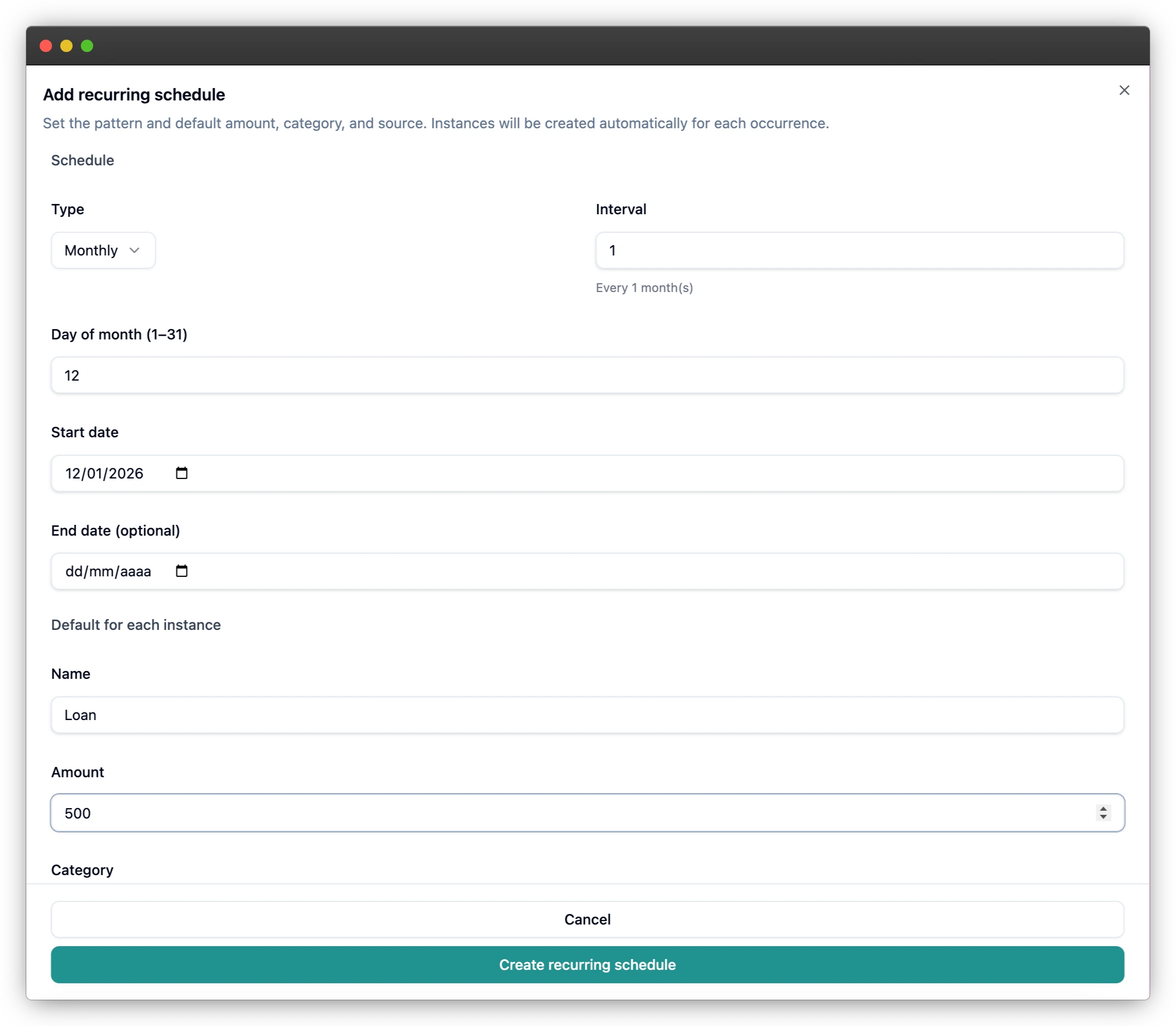
Recurring entries remove repetitive manual work and ensure future periods are realistic by default.
- Rent, subscriptions, insurance, services.
- Monthly and yearly schedules supported.
- Improves future-month visibility immediately.
Future planned expenses
Use future planning for known commitments that are not yet due but should already influence budget decisions.
- Renewals, taxes, travel, seasonal costs.
- Large planned purchases with known date ranges.
- Prevents false optimism in upcoming-month budgets.
Data quality practices
Most reporting issues come from inconsistent field completion. A few rules create clean, trustworthy data.
- Always verify amount and date first.
- Assign category, source, and payment method consistently.
- Run a short weekly cleanup for uncategorized/duplicate items.
Manual entry vs ticket analysis
Use manual entry when speed and certainty are high. Use ticket analysis when there are multiple lines or when transcription would take too long.
- Manual is best for simple single-item expenses.
- Ticket analysis is best for receipts with many items.
- Both flows should end with the same quality check before save.
Recommended validation before saving
Before confirming any expense, check these fields in this order: amount, date, category, source, payment method.
- If amount/date is wrong, analytics becomes unreliable.
- If category is wrong, insights become noisy.
- If source/payment method is wrong, cash-flow analysis weakens.