Sources and payment methods
Parne separates where money is managed (source) from how payment is executed (payment method). This separation improves both day-to-day operations and strategic analysis.
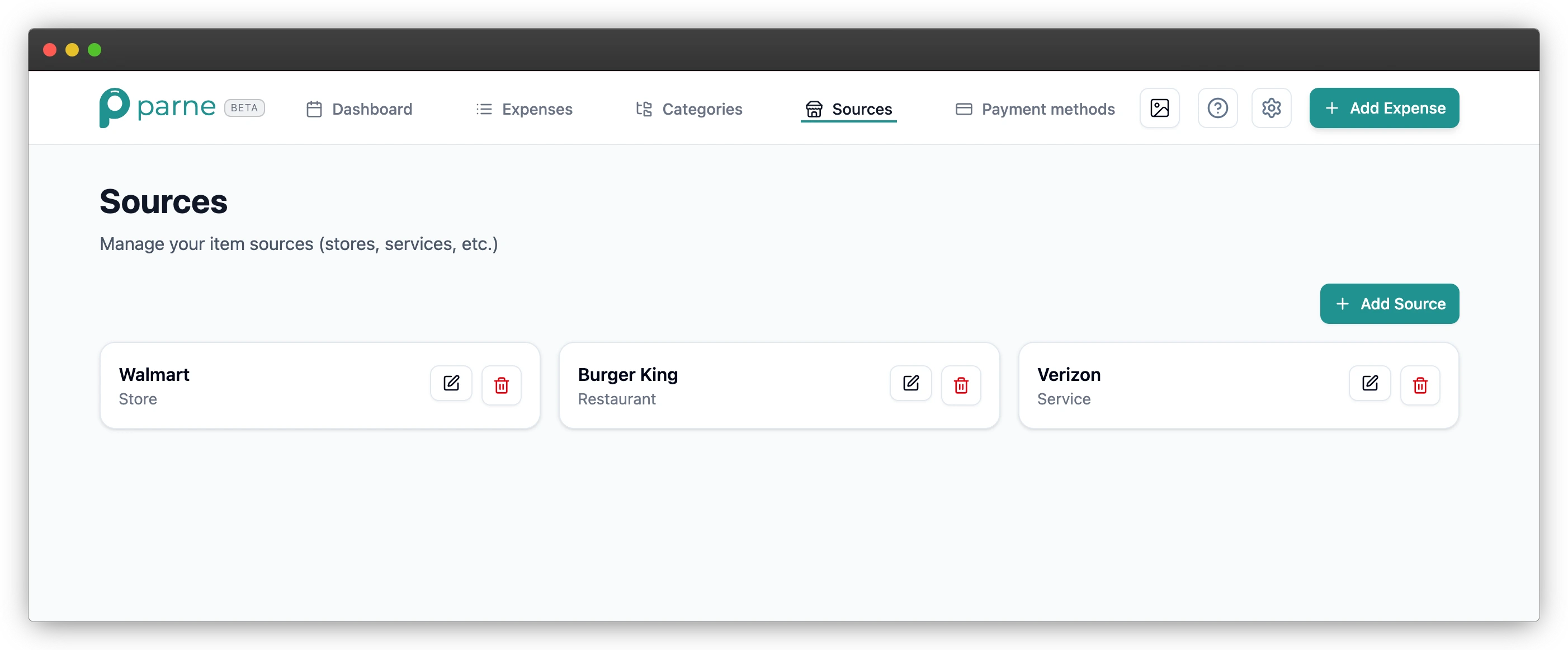
Sources: where money is held
Sources represent containers and origins of funds. They answer: from which pocket/account did this expense actually come?
- Cash wallet, checking account, savings account.
- Useful for liquidity and balance distribution analysis.
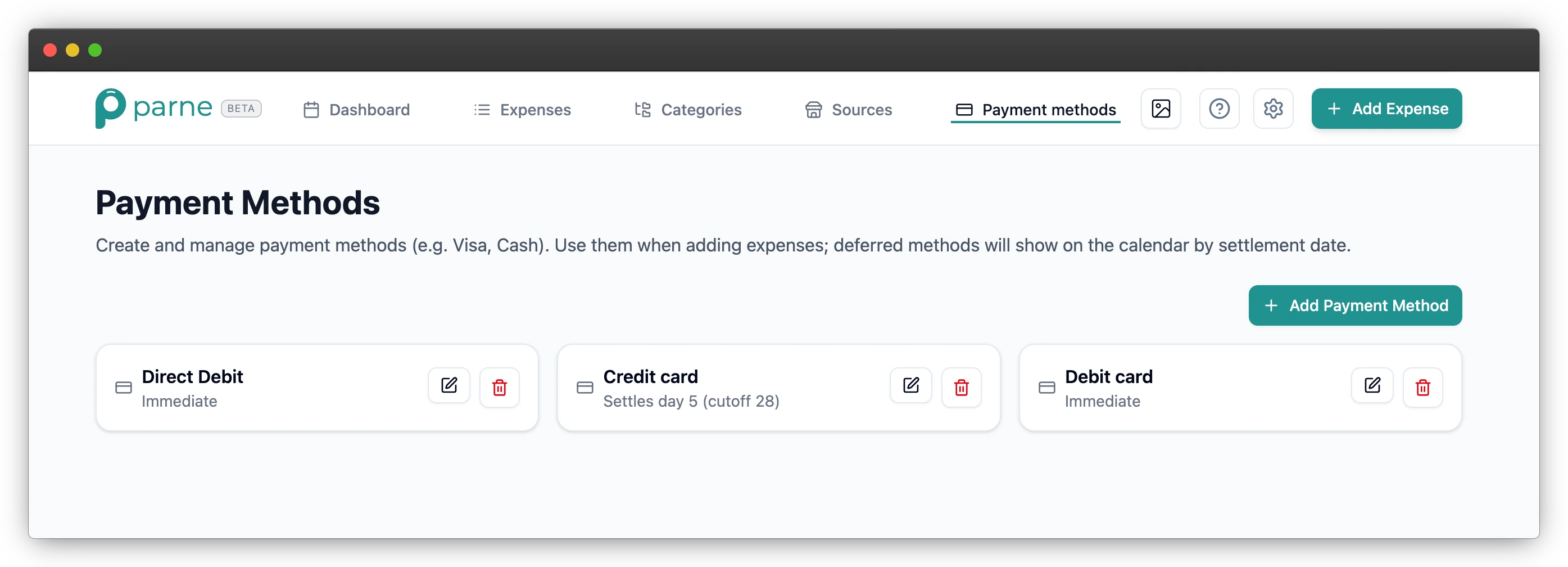
Payment methods: how payments are made
Payment methods represent the instrument used at payment time and can affect charge timing (especially credit methods).
- Cash, debit card, credit card, transfer.
- Useful for understanding payment behavior and reconciliation.
Why both dimensions matter
Category alone tells what you spent on; source + payment method explain how and from where spending was financed.
- Detect overreliance on specific payment instruments.
- Track which sources drain faster than expected.
- Plan cash flow with higher confidence.
Suggested setup
Create this structure early so expenses are complete from day one.
- Define your top 2-4 sources first.
- Create clear payment method labels.
- Keep naming stable for trend consistency.
Common configuration mistakes
Misconfiguration here can silently degrade analytics quality.
- Using one generic source for all expenses.
- Duplicating payment methods with slightly different names.
- Changing labels frequently and losing historical continuity.
Operational tip for teams or shared accounts
Define naming conventions once and keep them consistent for everyone entering expenses.
- Decide source naming format (e.g., Cash, Bank - Personal).
- Decide payment method naming format (e.g., Visa Credit, Debit).
- Document quick rules in your help/onboarding notes.